学ぶ
◁
◂
勉強
◂
◁
第一話
英語
Learning
分析
学ぶ
学ぶ
書き方:学ぶ
読み方:まなぶ
活用形:plain non-past
godan-bu-verb
1.
to study (in depth); to learn; to take lessons in
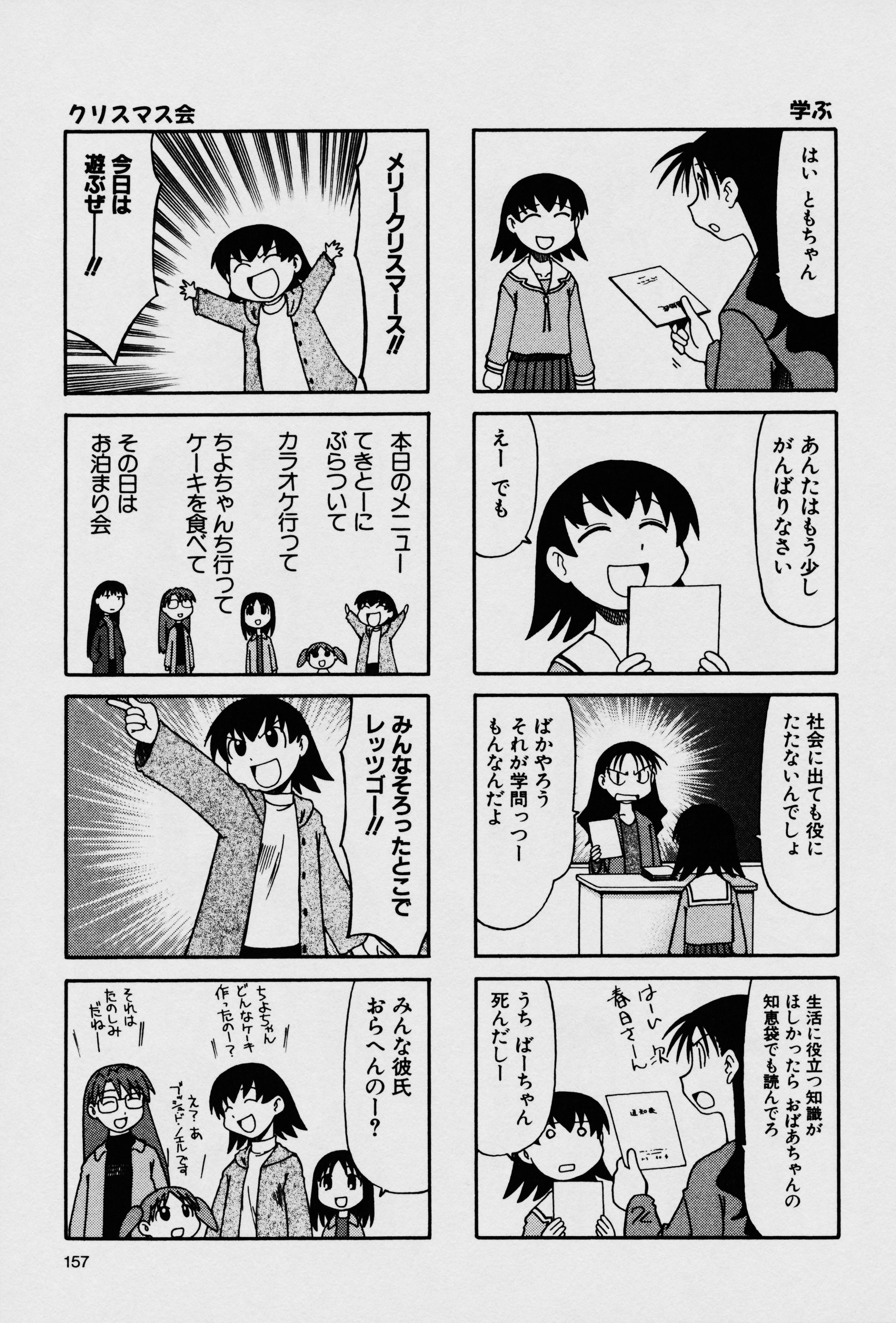
1コマ

ゆかり先生
はい ともちゃん
英語
Here Tomo
分析
はい
とも
ちゃん
はい
読み方:はい
interjection
polite
1.
yes; that is correct
interjection
2.
understood; I see; OK; okay
interjection
3.
present; here
as a response to a roll call
interjection
colloquialism
4.
pardon?; what's that?; come again?
with rising intonation
interjection
5.
now; here; here you go
used when calling for someone's attention or when handing something to someone
interjection
6.
giddy-up; giddap
とも

名前:智(とも)
苗字:滝野(たきの)
A very energetic student in class 3. Tomo always has energy to spare!
ちゃん
読み方:ちゃん
suffix
familiar
1.
suffix for familiar person
通知表
英語
Report Card
分析
通知表
通知表
書き方:通知表
読み方:つうちひょう
noun
1.
report card
2コマ
ゆかり先生
あんたはもう少しがんばりなさい
英語
You need to try a little harder
分析
あんた
は
もう
少し
がんばり
なさい
あんた
書き方:貴方
読み方:あんた
pronoun
colloquialism
usually-kana
1.
you
familiar form of あなた; oft. considered rude
は
読み方:は
particle
1.
topic marker particle
pronounced わ in modern Japanese
particle
2.
indicates contrast with another option (stated or unstated)
particle
3.
adds emphasis
もう
読み方:もう
adverb
1.
now; soon; shortly; before long; presently
adverb
2.
already; yet; by now; (not) anymore
adverb
3.
further; more; again; another; the other
interjection
4.
tsk; dammit; jeez; come on; what the hell
used to strengthen expression of an emotion (often exasperation)
少し
書き方:少し
読み方:すこし
adverb
noun
1.
small quantity; little; few; something
adverb
noun
2.
little while
adverb
noun
3.
short distance
がんばり
書き方:頑張る
読み方:がんばる
活用形:stem-form
godan-ru-verb
intransitive-verb
1.
to persevere; to persist; to keep at it; to hang on; to hold out; to do one's best
godan-ru-verb
intransitive-verb
2.
to insist that; to stick to (one's opinion)
godan-ru-verb
intransitive-verb
3.
to remain in a place; to stick to one's post; to refuse to budge
なさい
書き方:為さい
読み方:なさい
expression
usually-kana
1.
do ...
imperative form often used after the -masu stem of a verb

とも
えー でも
英語
Huh, but-
分析
えー
でも
えー
読み方:ええ, えー
interjection
1.
yes; that is correct; right
interjection
2.
um; errr
interjection
3.
huh?
interjection
4.
grrr; gah; Must I?
noun-or-verb-acting-prenominally
kansai
5.
good
でも
読み方:でも
conjunction
1.
but; however; though; nevertheless; still; yet; even so; also; as well
particle
2.
even
particle
3.
however; no matter how; even if; even though
particle
4.
... or something
particle
5.
either ... or ...; neither ... nor ...
as 〜でも〜でも
prefix
6.
pseudo-; quack; in-name-only
before an occupation, etc.
prefix
7.
for lack of anything better to do
before an occupation, etc.
3コマ
とも
社会に出ても役にたたないんでしょ
英語
I thought it wasn't useful for when we go out into society?
分析
社会
に
出て
も
役にたたない
ん
でしょ
社会
書き方:社会
読み方:しゃかい
noun
1.
society; public; community; the world
noun
abbreviation
2.
social studies
に
読み方:に
particle
1.
at (place, time); in; on; during
particle
2.
to (direction, state); toward; into
particle
3.
for (purpose)
particle
4.
because of (reason); for; with
particle
5.
by; from
particle
6.
as (i.e. in the role of)
particle
7.
per; in; for; a (e.g. "once a month")
particle
8.
and; in addition to
出て
書き方:出る
読み方:でる
活用形:te-form
ichidan-verb
intransitive-verb
1.
to leave; to exit; to go out; to come out; to get out
ichidan-verb
intransitive-verb
2.
to leave (on a journey); to depart; to start out; to set out
ichidan-verb
intransitive-verb
3.
to move forward
ichidan-verb
intransitive-verb
4.
to come to; to get to; to lead to; to reach
ichidan-verb
intransitive-verb
5.
to appear; to come out; to emerge; to surface; to come forth; to turn up; to be found; to be detected; to be discovered; to be exposed; to show; to be exhibited; to be on display
ichidan-verb
intransitive-verb
6.
to appear (in print); to be published; to be announced; to be issued; to be listed; to come out
ichidan-verb
intransitive-verb
7.
to attend; to participate; to take part; to enter (an event); to play in; to perform
ichidan-verb
intransitive-verb
8.
to be stated; to be expressed; to come up; to be brought up; to be raised
ichidan-verb
intransitive-verb
9.
to sell
ichidan-verb
intransitive-verb
10.
to exceed; to go over
ichidan-verb
intransitive-verb
11.
to stick out; to protrude
ichidan-verb
intransitive-verb
12.
to break out; to occur; to start; to originate
ichidan-verb
intransitive-verb
13.
to be produced
ichidan-verb
intransitive-verb
14.
to come from; to be derived from
ichidan-verb
intransitive-verb
15.
to be given; to get; to receive; to be offered; to be provided; to be presented; to be submitted; to be handed in; to be turned in; to be paid
ichidan-verb
intransitive-verb
16.
to answer (phone, door, etc.); to get
ichidan-verb
intransitive-verb
17.
to assume (an attitude); to act; to behave
ichidan-verb
intransitive-verb
18.
to pick up (speed, etc.); to gain
ichidan-verb
intransitive-verb
19.
to flow (e.g. tears); to run; to bleed
ichidan-verb
intransitive-verb
20.
to graduate
ichidan-verb
intransitive-verb
vulgar
21.
to ejaculate; to cum
も
読み方:も
particle
1.
too; also; in addition; as well; (not) either (in a negative sentence)
particle
2.
both A and B; A as well as B; neither A nor B (in a negative sentence)
as AもBも
particle
3.
even; as much as; as many as; as far as; as long as; no less than; no fewer than
used for emphasis or to express absence of doubt regarding a quantity, etc.
particle
4.
even if; even though; although; in spite of
often as 〜ても, 〜でも, 〜とも, etc.
adverb
colloquialism
abbreviation
5.
further; more; again; another; the other
役にたたない
書き方:役に立つ, 役にたつ
読み方:やくにたつ
活用形:negative non-past
expression
godan-tsu-verb
1.
to be helpful; to be useful
ん
読み方:ん
1.
oh!; good heavens!
2.
ugh!; oh no!
3.
ah!; the penny drops!
4.
yes!; okay!
5.
yes; yeah; uh huh
6.
huh?; what?
auxiliary-verb
suffix
7.
not
negative verb ending used in informal speech; abbr. of negative verb ending ぬ
particle
8.
's; of; belonging to
abbr. of particle の; indicates possessive
particle
9.
at (place, time); in; on; during
abbr. of particle に; used esp. when it precedes the verb なる
でしょ
読み方:でしょう, でしょ
expression
1.
it seems; I think; I guess; I wonder
expression
2.
right?; don't you agree?
ゆかり先生
ばかやろう それが学問っつーもんなんだよ
英語
You dumbass, I was talking about *academics*
分析
ばかやろう
それ
が
学問
っつー
もん
なんだ
よ
ばかやろう
書き方:馬鹿野郎
読み方:ばかやろう
noun
colloquialism
usually-kana
derogatory
1.
goddamn idiot; moron; nitwit
それ
書き方:其れ
読み方:それ
pronoun
usually-kana
1.
that; it
indicating an item or person near the listener, the action of the listener, or something on their mind
pronoun
usually-kana
2.
then; that point (in time); that time
が
読み方:が
particle
1.
indicates sentence subject (occasionally object)
particle
2.
indicates possessive (esp. in literary expressions)
conjunction
3.
but; however; still; and
conjunction
4.
regardless of; whether (or not)
after the volitional form of a verb
学問
書き方:学問
読み方:がくもん
noun
suru-verb
1.
study; scholarship; learning; education; knowledge
noun
2.
discipline; branch of learning; (a) science
っつー
読み方:っつ, っつー, っつう
particle
colloquialism
1.
called; known as; that
particle
colloquialism
2.
to say
Only applies to っつ
もん
書き方:物
読み方:もの, もん
noun
1.
thing; object; article; stuff; substance
noun
2.
one's things; possessions; property; belongings
as 〜のもの, 〜のもん
noun
3.
things; something; anything; everything; nothing
noun
4.
quality
noun
5.
reason; the way of things
noun
usually-kana
6.
used to emphasize emotion, judgment, etc.; used to indicate a common occurrence in the past (after a verb in past tense); used to indicate a general tendency; used to indicate something that should happen
formal noun often used as 〜ものだ
noun-suffix
usually-kana
7.
item classified as ...; item related to ...; work in the genre of ...
noun-suffix
8.
cause of ...; cause for ...
prefix
9.
somehow; somewhat; for some reason
prefix
10.
really; truly
なんだ
読み方:なのだ, なんだ
auxiliary
1.
it is assuredly that ...; can say with confidence that ...
auxiliary
kansai
2.
did not ...
after the -nai stem of a verb
よ
読み方:よ
particle
1.
hey; you
at sentence-end; indicates certainty, emphasis, contempt, request, etc.
particle
2.
hey
after a noun; used when calling out to someone
particle
3.
hey; hold on
in mid-sentence; used to catch one's breath or get someone's attention
interjection
4.
yo; hey
4コマ
ゆかり先生
生活に彼立つ知識がほしかったら おばあちゃんの知恵袋でも読んでろ
英語
反訳
If you wanted knowledge that's useful for everyday life, listen to your grandma.
直訳
If you wanted knowledge that's useful for everyday life, go learn from your grandma's wisdom.
分析
生活
に
彼
立つ
知識
が
ほしかったら
おばあちゃん
の
知恵袋
でも
読んで
ろ
生活
書き方:生活
読み方:せいかつ
noun
suru-verb
1.
living; life (one's daily existence); livelihood
に
読み方:に
particle
1.
at (place, time); in; on; during
particle
2.
to (direction, state); toward; into
particle
3.
for (purpose)
particle
4.
because of (reason); for; with
particle
5.
by; from
particle
6.
as (i.e. in the role of)
particle
7.
per; in; for; a (e.g. "once a month")
particle
8.
and; in addition to
彼
書き方:彼
読み方:かれ
pronoun
1.
he; him
noun
2.
boyfriend
立つ
書き方:立つ
読み方:たつ
活用形:plain non-past
godan-tsu-verb
intransitive-verb
1.
to stand; to rise; to stand up
godan-tsu-verb
intransitive-verb
2.
to find oneself (e.g. in a difficult position)
godan-tsu-verb
intransitive-verb
3.
to depart (on a plane, train, etc.)
usu. 発つ
知識
書き方:知識
読み方:ちしき
noun
1.
knowledge; information
が
読み方:が
particle
1.
indicates sentence subject (occasionally object)
particle
2.
indicates possessive (esp. in literary expressions)
conjunction
3.
but; however; still; and
conjunction
4.
regardless of; whether (or not)
after the volitional form of a verb
ほしかったら
書き方:欲しい
読み方:ほしい
活用形:conditional past
adjective
1.
wanted; wished for; in need of; desired
auxiliary-adjective
usually-kana
2.
I want (you) to
after the -te form of a verb
おばあちゃん
書き方:お婆ちゃん
読み方:おばあちゃん
noun
familiar
usually-kana
1.
granny; grandma; gran
noun
familiar
usually-kana
2.
old lady; old woman
の
読み方:の
particle
1.
indicates possessive
occasionally ん, orig. written 乃 or 之
particle
2.
nominalizes verbs and adjectives
particle
3.
substitutes for "ga" in subordinate phrases
particle
4.
(at sentence-end, falling tone) indicates a confident conclusion
often ん
particle
femanine
5.
(at sentence-end) indicates emotional emphasis
particle
6.
(at sentence-end, rising tone) indicates question
知恵袋
書き方:知恵袋
読み方:ちえぶくろ
noun
1.
all one's wisdom; bag (full) of wisdom
noun
2.
the brains (of a group); the smart one; fount of wisdom; personal adviser
でも
読み方:でも
conjunction
1.
but; however; though; nevertheless; still; yet; even so; also; as well
particle
2.
even
particle
3.
however; no matter how; even if; even though
particle
4.
... or something
particle
5.
either ... or ...; neither ... nor ...
as 〜でも〜でも
prefix
6.
pseudo-; quack; in-name-only
before an occupation, etc.
prefix
7.
for lack of anything better to do
before an occupation, etc.
読んで
書き方:読む
読み方:よむ
活用形:te-form
godan-mu-verb
transitive-verb
1.
to read
godan-mu-verb
transitive-verb
2.
to count
now mostly used in idioms
godan-mu-verb
transitive-verb
3.
to guess; to predict; to read (someone's thoughts); to see (e.g. into someone's heart); to divine
ろ
書き方:居る
読み方:いる
活用形:command positive (spoken)
ichidan-verb
intransitive-verb
usually-kana
1.
to be (of animate objects); to exist
ichidan-verb
intransitive-verb
usually-kana
2.
to stay
ichidan-verb
auxiliary-verb
usually-kana
3.
to be ...-ing; to have been ...-ing
after the -te form of a verb; indicates continuing action or state
はーい 次春日ちゃん
英語
Alright, next - Haruhi!
分析
はーい
次
春日
ちゃん
はーい
読み方:はい
interjection
polite
1.
yes; that is correct
interjection
2.
understood; I see; OK; okay
interjection
3.
present; here
as a response to a roll call
interjection
colloquialism
4.
pardon?; what's that?; come again?
with rising intonation
interjection
5.
now; here; here you go
used when calling for someone's attention or when handing something to someone
interjection
6.
giddy-up; giddap
次
書き方:次
読み方:つぎ
noun
no-adjective
1.
next; following; subsequent
noun
no-adjective
2.
stage; station
ちゃん
読み方:ちゃん
suffix
familiar
1.
suffix for familiar person
通知表
英語
Report Card
分析
通知表
通知表
書き方:通知表
読み方:つうちひょう
noun
1.
report card
とも
うち ばーちゃん死んだしー
英語
My grandma's dead though...
分析
うち
ばーちゃん
死んだ
しー
うち
書き方:内
読み方:うち
noun
adverb
1.
inside; within
noun
adverb
usually-kana
2.
while (e.g. one is young); during; within (e.g. a day); in the course of
noun
adverb
usually-kana
3.
among; amongst; (out) of; between
as 〜のうち
noun
usually-kana
4.
in (secret, chaos, poverty, etc.); amidst; with (e.g. success)
also 裡, 裏; as 〜のうちに after a noun representing a state or condition
noun
5.
within oneself; one's feelings; inner thoughts
noun
no-adjective
usually-kana
6.
we; our company; our organization
noun
no-adjective
usually-kana
7.
one's home; one's family
also 家
noun
8.
my spouse; my husband; my wife
noun
9.
signed on behalf of (husband's name) by his wife
in a letter after the husband's name
pronoun
kansai
usually-kana
10.
I; me
primarily used by women and children
ばーちゃん
読み方:ばあちゃん
noun
familiar
usually-kana
1.
granny; grandma; gran
noun
familiar
usually-kana
2.
old lady; old woman
死んだ
書き方:死ぬ
読み方:しぬ
活用形:plain past
godan-nu-verb
irregular-godan-nu-verb
intransitive-verb
1.
to die; to pass away
godan-nu-verb
irregular-godan-nu-verb
intransitive-verb
2.
to lose spirit; to lose vigor; to look dead
godan-nu-verb
irregular-godan-nu-verb
intransitive-verb
3.
to cease; to stop
しー
読み方:し
particle
conjunction
1.
and; besides; moreover; what's more; not only ... but also
particle
conjunction
2.
because; since
usu. indicates one of several reasons
particle
conjunction
3.
the thing is; for one thing
at sentence end; gives reason for an unstated but deducible conclusion
第二話
クリスマス会
英語
Christmas Party
分析
クリスマス
会
クリスマス
読み方:クリスマス
noun
1.
Christmas
会
書き方:会
読み方:かい
noun
noun-suffix
1.
meeting; assembly; party; gathering; conference; athletic meet
noun
noun-suffix
2.
society; association; club
1コマ
とも
メリークリスマース!!
英語
MERRY CHRISTMAS!!
分析
メリー
クリスマース
!
!
メリー
読み方:メリー
noun-or-verb-acting-prenominally
1.
merry
クリスマース
読み方:クリスマス
noun
1.
Christmas
今日は遊ぶぜーー!!
英語
LET'S HAVE FUN TODAY!!
分析
今日
は
遊ぶ
ぜーー
!
!
今日
書き方:今日
読み方:きょう, こんにち
noun
adverb
1.
today; this day
noun
adverb
2.
these days; recently; nowadays
は
読み方:は
particle
1.
topic marker particle
pronounced わ in modern Japanese
particle
2.
indicates contrast with another option (stated or unstated)
particle
3.
adds emphasis
遊ぶ
書き方:遊ぶ
読み方:あそぶ
活用形:plain non-past
godan-bu-verb
intransitive-verb
1.
to play (games, sports); to enjoy oneself; to have a good time
godan-bu-verb
intransitive-verb
2.
to mess about (with alcohol, gambling, philandery, etc.)
godan-bu-verb
intransitive-verb
3.
to be idle; to do nothing; to be unused
godan-bu-verb
intransitive-verb
4.
to meet up (with friends); to hang out
godan-bu-verb
intransitive-verb
5.
to give oneself up (to gambling, drinking, etc.)
godan-bu-verb
intransitive-verb
6.
to go to (for pleasure or for study)
as 〜に遊ぶ
godan-bu-verb
intransitive-verb
7.
to tease (somebody); to play (with)
godan-bu-verb
intransitive-verb
baseball
8.
to intentionally throw a ball to lower the batter's concentration
ぜーー
読み方:ぜ
particle
masculine
familiar
1.
I can tell you
used at sentence end; adds light force or emphasis to a sentence
particle
masculine
2.
heh
at sentence end; used to make a sentence threatening or ironic
2コマ
とも
本日のメニュー
英語
Today's menu:
分析
本日
の
メニュー
本日
書き方:本日
読み方:ほんじつ
noun
adverb
1.
today; this day
の
読み方:の
particle
1.
indicates possessive
occasionally ん, orig. written 乃 or 之
particle
2.
nominalizes verbs and adjectives
particle
3.
substitutes for "ga" in subordinate phrases
particle
4.
(at sentence-end, falling tone) indicates a confident conclusion
often ん
particle
femanine
5.
(at sentence-end) indicates emotional emphasis
particle
6.
(at sentence-end, rising tone) indicates question
メニュー
読み方:メニュー
noun
1.
menu
noun
2.
schedule; program; programme
noun
computing
3.
(computer) menu
てきとーに ぶらついて
英語
Wander around casually
分析
てきとー
に
ぶらついて
てきとー
書き方:適当
読み方:てきとう
adjectival-noun
noun
1.
suitable; proper; appropriate; adequate; fit; fair
adjectival-noun
noun
2.
perfunctory; half-minded; sloppy; lazy; careless; noncommittal; unreliable; irresponsible
に
読み方:に
particle
1.
at (place, time); in; on; during
particle
2.
to (direction, state); toward; into
particle
3.
for (purpose)
particle
4.
because of (reason); for; with
particle
5.
by; from
particle
6.
as (i.e. in the role of)
particle
7.
per; in; for; a (e.g. "once a month")
particle
8.
and; in addition to
ぶらついて
読み方:ぶらつく, ブラつく
活用形:te-form
godan-ku-verb
intransitive-verb
1.
to stroll about; to saunter; to wander; to ramble; to hang around; to linger
godan-ku-verb
intransitive-verb
2.
to dangle; to swing
カラオケ行って
英語
Go to karaoke
分析
カラオケ
行って
カラオケ
読み方:カラオケ
noun
usually-kana
1.
karaoke
from 空 and オーケストラ
行って
書き方:行く
読み方:いく, ゆく
活用形:te-form
godan-iku-verb
intransitive-verb
1.
to go; to move (in a direction or towards a specific location); to head (towards); to be transported (towards); to reach
godan-iku-verb
intransitive-verb
2.
to proceed; to take place
い sometimes omitted in auxiliary use
godan-iku-verb
intransitive-verb
3.
to pass through; to come and go
godan-iku-verb
intransitive-verb
4.
to walk
godan-iku-verb
intransitive-verb
5.
to die; to pass away
godan-iku-verb
intransitive-verb
6.
to do (in a specific way)
godan-iku-verb
intransitive-verb
7.
to stream; to flow
godan-iku-verb
auxiliary-verb
usually-kana
8.
to continue
after the -te form of a verb
godan-iku-verb
intransitive-verb
usually-kana
9.
to have an orgasm; to come; to cum
godan-iku-verb
intransitive-verb
usually-kana
slang
10.
to trip; to get high; to have a drug-induced hallucination
ちよちゃんち行って ケーキを食べて
英語
Go to Chiyo-chan's place to eat cake
分析
ちよ
ちゃん
ち
行って
ケーキ
を
食べて
ちよ

名前:ちよ
苗字:美浜(みはま)
A genius girl who was able to transfer into highschool early.
ちゃん
読み方:ちゃん
suffix
familiar
1.
suffix for familiar person
ち
書き方:地
読み方:ち
noun
noun-suffix
1.
earth; ground; land; soil
noun
noun-suffix
2.
place
noun
noun-suffix
3.
territory
noun
noun-suffix
4.
bottom (of a package, book, etc.)
noun
noun-suffix
5.
earth (one of the five elements)
行って
書き方:行く
読み方:いく, ゆく
活用形:te-form
godan-iku-verb
intransitive-verb
1.
to go; to move (in a direction or towards a specific location); to head (towards); to be transported (towards); to reach
godan-iku-verb
intransitive-verb
2.
to proceed; to take place
い sometimes omitted in auxiliary use
godan-iku-verb
intransitive-verb
3.
to pass through; to come and go
godan-iku-verb
intransitive-verb
4.
to walk
godan-iku-verb
intransitive-verb
5.
to die; to pass away
godan-iku-verb
intransitive-verb
6.
to do (in a specific way)
godan-iku-verb
intransitive-verb
7.
to stream; to flow
godan-iku-verb
auxiliary-verb
usually-kana
8.
to continue
after the -te form of a verb
godan-iku-verb
intransitive-verb
usually-kana
9.
to have an orgasm; to come; to cum
godan-iku-verb
intransitive-verb
usually-kana
slang
10.
to trip; to get high; to have a drug-induced hallucination
ケーキ
読み方:ケーキ
noun
food
1.
cake
を
読み方:を
particle
1.
indicates direct object of action
particle
2.
indicates subject of causative expression
particle
3.
indicates an area traversed
particle
4.
indicates time (period) over which action takes place
particle
5.
indicates point of departure or separation of action
particle
6.
indicates object of desire, like, hate, etc.
食べて
書き方:食べる
読み方:たべる
活用形:te-form
ichidan-verb
transitive-verb
1.
to eat
ichidan-verb
transitive-verb
2.
to live on (e.g. a salary); to live off; to subsist on
その日はお泊まり会
英語
and have a slumber party tonight!
分析
その
日
は
お
泊まり
会
その
書き方:其の
読み方:その
prenoun-adjectival
usually-kana
1.
that; the
something or someone distant from the speaker, close to the listener; actions of the listener, or ideas expressed or understood by the listener
prenoun-adjectival
usually-kana
2.
part (as in "part two")
preceding a number
interjection
3.
um ...; er ...; uh ...
日
書き方:日
読み方:にち
noun
abbreviation
1.
Sunday
suffix
2.
day (of the month)
also んち or ち
suffix
counter
3.
counter for days
also んち or ち
noun
noun-suffix
noun-prefix
abbreviation
4.
Japan
は
読み方:は
particle
1.
topic marker particle
pronounced わ in modern Japanese
particle
2.
indicates contrast with another option (stated or unstated)
particle
3.
adds emphasis
お
書き方:御
読み方:お
prefix
honorific
polite
humble
usually-kana
1.
honorific/polite/humble prefix
usu. before a term with a kun-yomi reading; おん is more formal
泊まり
書き方:泊まり
読み方:とまり
noun
1.
overnight stay; stopover
noun
2.
inn; hotel
noun
3.
anchorage
noun
abbreviation
4.
night duty
会
書き方:会
読み方:かい
noun
noun-suffix
1.
meeting; assembly; party; gathering; conference; athletic meet
noun
noun-suffix
2.
society; association; club
3コマ
とも
みんなそろったとこでレッツゴー!!
英語
Now that we're all here, LET'S GO!!
分析
みんな
そろった
とこ
で
レッツゴー
!
!
みんな
書き方:皆
読み方:みんな, みな
noun
pronoun
adverb
usually-kana
1.
everyone; everybody; all
noun
adverb
usually-kana
2.
everything; all
そろった
書き方:揃う
読み方:そろう
活用形:plain past
godan-u-verb
intransitive-verb
1.
to be complete; to be all present; to make a full set; to be satisfied (of conditions)
godan-u-verb
intransitive-verb
2.
to be equal; to be uniform; to be even; to match; to agree
godan-u-verb
intransitive-verb
3.
to gather; to assemble; to be collected
とこ
書き方:所
読み方:ところ, とこ
noun
adverb
suffix
1.
place; spot; scene; site
also pronounced どころ when a suffix
noun
suffix
usually-kana
2.
address
noun
suffix
usually-kana
3.
district; area; locality
noun
suffix
usually-kana
4.
one's house
noun
suffix
usually-kana
5.
point; aspect; side; facet
noun
suffix
usually-kana
6.
passage (in text); part
noun
suffix
usually-kana
7.
space; room
noun
suffix
usually-kana
8.
thing; matter
noun
usually-kana
9.
whereupon; as a result
after the plain past form of a verb
noun
usually-kana
10.
about to; on the verge of
after present form of a verb
noun
usually-kana
11.
was just doing; was in the process of doing; have just done; just finished doing
after past form of a verb
で
読み方:で, にて
particle
1.
at; in
indicates location of action; にて is the formal literary form
particle
2.
at; when
indicates time of action
particle
3.
by; with
indicates means of action
conjunction
4.
and then; so
auxiliary
5.
and; then
indicates continuing action; alternative form of 〜て used for some verb types
particle
kansai
6.
let me tell you; don't you know
at sentence-end; indicates certainty, emphasis, etc.
レッツゴー
読み方:レッツゴー, レッツ・ゴー
expression
1.
let's go
4コマ

おおさか
みんな彼氏おらへんのー?
英語
Don'chy'all got boyfriends?
分析
みんな
彼氏
おら
へん
のー
?
みんな
書き方:皆
読み方:みんな, みな
noun
pronoun
adverb
usually-kana
1.
everyone; everybody; all
noun
adverb
usually-kana
2.
everything; all
彼氏
書き方:彼氏
読み方:かれし
noun
1.
boyfriend
pronoun
familiar
jocular-term
2.
he; him
おら
書き方:居る
読み方:おる
活用形:stem-form
godan-ru-verb
intransitive-verb
usually-kana
humble
1.
to be (animate); to be; to exist
godan-ru-verb
auxiliary-verb
2.
to be ..ing
after the -te form of a verb; indicates continuing action or state
godan-ru-verb
auxiliary-verb
3.
to (have the audacity to) do
after -masu base of verb; indicates contempt or disdain for another's actions
へん
読み方:へん
expression
kansai
1.
suffix used to negate a verb in the non-past tense
2.
humph; hmph
のー
読み方:の
particle
1.
indicates possessive
occasionally ん, orig. written 乃 or 之
particle
2.
nominalizes verbs and adjectives
particle
3.
substitutes for "ga" in subordinate phrases
particle
4.
(at sentence-end, falling tone) indicates a confident conclusion
often ん
particle
femanine
5.
(at sentence-end) indicates emotional emphasis
particle
6.
(at sentence-end, rising tone) indicates question
とも
ちよちゃん どんなケーキ作ったのー?
英語
Chiyo! What kinda cake did you make?
分析
ちよ
ちゃん
どんな
ケーキ
作った
のー
?
ちよ
名前:ちよ
苗字:美浜(みはま)
A genius girl who was able to transfer into highschool early.
ちゃん
読み方:ちゃん
suffix
familiar
1.
suffix for familiar person
どんな
読み方:どんな
prenoun-adjectival
1.
what kind of; what sort of; what
prenoun-adjectival
2.
no matter what (kind of); whatever; any; all
as どんな...でも, どんな...も, etc.
ケーキ
読み方:ケーキ
noun
food
1.
cake
作った
書き方:作る, 造る, 創る
読み方:つくる
活用形:plain past
godan-ru-verb
transitive-verb
1.
to make; to produce; to manufacture; to build; to construct
造る usu. for large-scale building, manufacturing, etc.; 創る usu. for creating
godan-ru-verb
transitive-verb
2.
to prepare (food); to brew (alcohol)
godan-ru-verb
transitive-verb
3.
to raise; to grow; to cultivate; to train
godan-ru-verb
transitive-verb
4.
to till
godan-ru-verb
transitive-verb
5.
to draw up (a document); to make out; to prepare; to write
godan-ru-verb
transitive-verb
6.
to create (an artistic work, etc.); to compose
godan-ru-verb
transitive-verb
7.
to coin (a phrase); to organize; to organise; to establish; to found
godan-ru-verb
transitive-verb
8.
to have (a child)
godan-ru-verb
transitive-verb
9.
to make up (one's face, etc.)
godan-ru-verb
transitive-verb
10.
to fabricate (an excuse, etc.)
godan-ru-verb
transitive-verb
11.
to give a (false) appearance; to feign (a smile, etc.); to put on a show of emotion
godan-ru-verb
transitive-verb
12.
to form (a line, etc.)
godan-ru-verb
transitive-verb
13.
to set (a record)
godan-ru-verb
transitive-verb
14.
to commit (a sin, etc.)
のー
読み方:の
particle
1.
indicates possessive
occasionally ん, orig. written 乃 or 之
particle
2.
nominalizes verbs and adjectives
particle
3.
substitutes for "ga" in subordinate phrases
particle
4.
(at sentence-end, falling tone) indicates a confident conclusion
often ん
particle
femanine
5.
(at sentence-end) indicates emotional emphasis
particle
6.
(at sentence-end, rising tone) indicates question

ちよ
え? あ ブッシュ・ド・ノエルです
英語
Huh? Oh! It's bûche de Noël!
分析
え
?
あ
ブッシュ・ド・ノエル
です
え
読み方:え
interjection
1.
eh?; what?; oh?
interjection
2.
yes; that's correct
あ
読み方:あっ, アッ, あ, ア
interjection
1.
ah; oh
expression of surprise, recollection, etc.
interjection
2.
hey!
used to get someone's attention
ブッシュ・ド・ノエル
読み方:ブッシュドノエル, ビュッシュドノエル, ブッシュ・ド・ノエル, ビュッシュ・ド・ノエル
noun
1.
bûche de Noël; Yule log (cake)
です
読み方:です
expression
polite
1.
be; is
polite copula
とも
それはたのしみだねーー
英語
I'm looking forward to that!
分析
それは
たのしみ
だ
ねーー
それは
読み方:それは, そりゃ, そりゃあ
adverb
1.
very; extremely
expression
2.
that is
A casual contraction of それは.
たのしみ
書き方:楽しみ
読み方:たのしみ
adjectival-noun
noun
1.
enjoyment; pleasure; diversion; amusement; hobby
adjectival-noun
noun
2.
anticipation; looking forward to
だ
読み方:だ
copula
1.
be; is
plain copula
auxiliary-verb
2.
did; (have) done
た after certain verb forms; indicates past or completed action
auxiliary-verb
3.
please; do
indicates light imperative
ねーー
読み方:ね
particle
1.
right?; isn't it?; doesn't it?; don't you?; don't you think?
at sentence end; used as a request for confirmation or agreement
interjection
2.
hey; say; listen; look; come on
particle
3.
you know; you see; I must say; I should think
at sentence end; used to express one's thoughts or feelings
particle
4.
will you?; please
at sentence end; used to make an informal request
particle
5.
so, ...; well, ...; you see, ...; you understand?
at the end of a non-final clause; used to draw the listener's attention to something
particle
6.
I'm not sure if ...; I have my doubts about whether ...
at sentence end after the question marker か
Having trouble with the vocabulary?
Download the Azumanga Daioh Anki Deck!
It covers the posted translations, and is updated each time a new one is posted!
Download the Azumanga Daioh Anki Deck!
It covers the posted translations, and is updated each time a new one is posted!