弁護人
◁
◂
勉強
◂
◁
第一話
英語
Defense Attorney Chiyo
分析
弁護人
弁護人

名前:ちよ
苗字:美浜(みはま)
A genius girl who was able to transfer into highschool early.
1コマ

ちよ
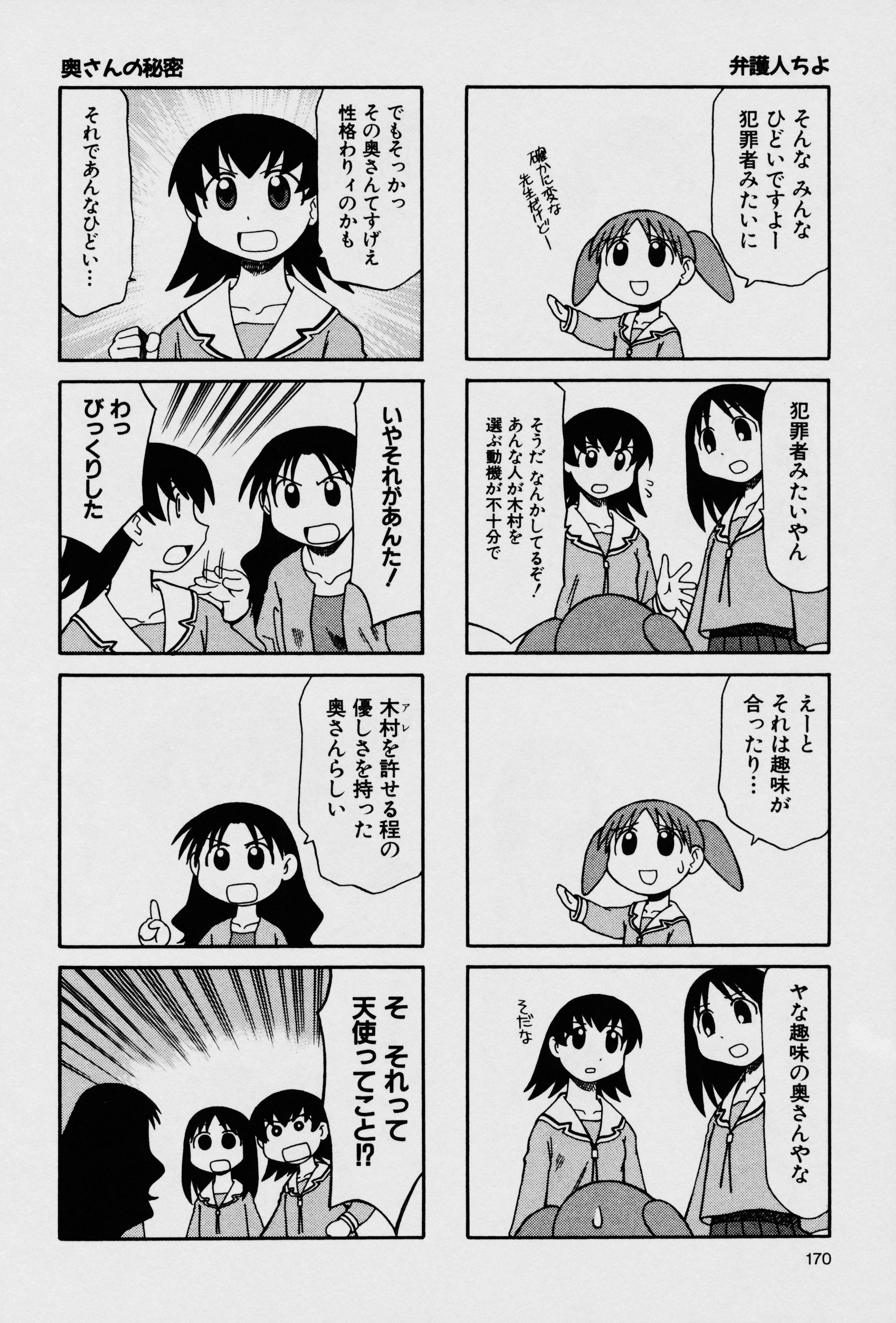
そんな みんな ひどいですよー 犯罪者みたいに
英語
Come one, you're all being so mean! Treating him like he's a criminal-
分析
そんな
みんな
ひどい
です
よー
犯罪者
みたい
に
そんな
読み方:そんな
prenoun-adjectival
1.
such; that sort of; that kind of; like that
about the actions of the listener, or about ideas expressed or understood by the listener
interjection
colloquialism
2.
no way!; never!
みんな
書き方:皆
読み方:みんな, みな
noun
pronoun
adverb
usually-kana
1.
everyone; everybody; all
noun
adverb
usually-kana
2.
everything; all
ひどい
書き方:酷い
読み方:ひどい
活用形:non-past
adjective
usually-kana
1.
cruel; heartless; hard; harsh; severe
adjective
usually-kana
2.
violent; intense; strong; heavy; extreme
adjective
usually-kana
3.
very bad; terrible; awful
adjective
usually-kana
4.
excessive; exorbitant; unreasonable; outrageous; unfair; unjust
です
読み方:です
expression
polite
1.
be; is
polite copula
よー
読み方:よ
particle
1.
hey; you
at sentence-end; indicates certainty, emphasis, contempt, request, etc.
particle
2.
hey
after a noun; used when calling out to someone
particle
3.
hey; hold on
in mid-sentence; used to catch one's breath or get someone's attention
interjection
4.
yo; hey
犯罪者
書き方:犯罪者
読み方:はんざいしゃ
noun
1.
criminal; culprit
みたい
読み方:みたい
suffix
adjectival-noun
colloquialism
1.
-like; sort of; similar to; resembling
に
読み方:に
particle
1.
at (place, time); in; on; during
particle
2.
to (direction, state); toward; into
particle
3.
for (purpose)
particle
4.
because of (reason); for; with
particle
5.
by; from
particle
6.
as (i.e. in the role of)
particle
7.
per; in; for; a (e.g. "once a month")
particle
8.
and; in addition to
確かに変な先生だけどー
英語
He certainly is an odd teacher, though...
分析
確か
に
変
な
先生
だけどー
確か
書き方:確か
読み方:たしか
adjectival-noun
noun
1.
sure; certain; positive; definite
adjectival-noun
noun
2.
reliable; trustworthy; safe; sound; firm; accurate; correct; exact
adverb
3.
If I'm not mistaken; If I remember correctly; If I remember rightly
に
読み方:に
particle
1.
at (place, time); in; on; during
particle
2.
to (direction, state); toward; into
particle
3.
for (purpose)
particle
4.
because of (reason); for; with
particle
5.
by; from
particle
6.
as (i.e. in the role of)
particle
7.
per; in; for; a (e.g. "once a month")
particle
8.
and; in addition to
変
書き方:変
読み方:へん
adjectival-noun
noun
1.
strange; odd; peculiar; weird; curious; queer; eccentric; funny; suspicious; fishy
adjectival-noun
noun
2.
unexpected
adjectival-noun
noun
3.
change
adjectival-noun
noun
4.
incident; disturbance; disaster; accident
noun-prefix
music
5.
flat
な
読み方:な
particle
1.
a continuous form of だ that is used for 形容動詞.
先生
書き方:先生
読み方:せんせい
noun
1.
teacher; instructor; master
noun
noun-suffix
honorific
2.
sensei; title or form of address for a teacher, master, doctor, lawyer, etc.
noun
familiar
jocular-term
3.
intimate or teasing form of address
だけどー
読み方:だけど
conjunction
1.
however
2コマ

おおさか
犯罪者みたいやん
英語
He look like a criminal, doesn't he?
分析
犯罪者
みたい
やん
犯罪者
書き方:犯罪者
読み方:はんざいしゃ
noun
1.
criminal; culprit
みたい
読み方:みたい
suffix
adjectival-noun
colloquialism
1.
-like; sort of; similar to; resembling
やん
読み方:やん
particle
kansai
1.
Indicates emphasis
at sentence end

とも
そうだ なんかしてるぞ! あんな人が木村を選ぶ動機が不十分で
英語
Right, something is going on! There's not enough reason for someone like that to pick Kimura...
分析
そうだ
なんか
して
る
ぞ
!
あんな
人
が
木村
を
選ぶ
動機
が
不十分
で
そうだ
読み方:そうだ
interjection
1.
that is so; that is right; it looks to me; that's my impression
expression
2.
people say that; it is said that; I hear that
after plain form of a verb or adjective
なんか
読み方:なんか
particle
adverb
1.
something like ...; things like ...; someone like ...; the likes of ...
oft. scornful or dismissive
して
書き方:為る
読み方:する
活用形:te-form
included-suru-verb
usually-kana
1.
to do; to carry out; to perform
included-suru-verb
usually-kana
2.
to cause to become; to make (into); to turn (into)
included-suru-verb
usually-kana
3.
to serve as; to act as; to work as
included-suru-verb
usually-kana
4.
to wear (clothes, a facial expression, etc.)
included-suru-verb
usually-kana
5.
to judge as being; to view as being; to think of as; to treat as; to use as
as 〜にする,〜とする
included-suru-verb
usually-kana
6.
to decide on; to choose
as 〜にする
included-suru-verb
intransitive-verb
usually-kana
7.
to be sensed (of a smell, noise, etc.)
as 〜がする
included-suru-verb
intransitive-verb
usually-kana
8.
to be (in a state, condition, etc.)
included-suru-verb
intransitive-verb
usually-kana
9.
to be worth; to cost
included-suru-verb
intransitive-verb
usually-kana
10.
to pass (of time); to elapse
included-suru-verb
transitive-verb
usually-kana
11.
to place, or raise, person A to a post or status B
as AをBにする
included-suru-verb
transitive-verb
usually-kana
12.
to transform A to B; to make A into B; to exchange A for B
as AをBにする
included-suru-verb
transitive-verb
usually-kana
13.
to make use of A for B; to view A as B; to handle A as if it were B
as AをBにする
included-suru-verb
transitive-verb
usually-kana
14.
to feel A about B
as AをBにする
suffix
included-suru-verb
usually-kana
15.
verbalizing suffix (applies to nouns noted in this dictionary with the part of speech "vs")
auxiliary-verb
included-suru-verb
usually-kana
16.
creates a humble verb (after a noun prefixed with "o" or "go")
auxiliary-verb
included-suru-verb
usually-kana
17.
to be just about to; to be just starting to; to try to; to attempt to
as 〜うとする,〜ようとする
る
書き方:居る
読み方:いる
活用形:plain non-past
ichidan-verb
intransitive-verb
usually-kana
1.
to be (of animate objects); to exist
ichidan-verb
intransitive-verb
usually-kana
2.
to stay
ichidan-verb
auxiliary-verb
usually-kana
3.
to be ...-ing; to have been ...-ing
after the -te form of a verb; indicates continuing action or state
ぞ
読み方:ぞ
particle
masculine
1.
adds force or indicates command
used at sentence end
あんな
読み方:あんな
prenoun-adjectival
1.
that sort of; that kind of; like that; such; so
about something or someone distant from both speaker and listener, or about a situation unfamiliar to both speaker and listener
人
書き方:人
読み方:ひと
noun
1.
man; person
noun
2.
human being; mankind; people
noun
usually-kana
3.
human (Homo sapiens); humans as a species
noun
4.
character; personality
noun
5.
man of talent; true man
noun
6.
another person; other people; others
noun
7.
adult
が
読み方:が
particle
1.
indicates sentence subject (occasionally object)
particle
2.
indicates possessive (esp. in literary expressions)
conjunction
3.
but; however; still; and
conjunction
4.
regardless of; whether (or not)
after the volitional form of a verb
木村

苗字:木村(きむら)
あだ名:木村先生(きむらせんせい)
An inappropriate teacher who is a little too interested in high school girls
を
読み方:を
particle
1.
indicates direct object of action
particle
2.
indicates subject of causative expression
particle
3.
indicates an area traversed
particle
4.
indicates time (period) over which action takes place
particle
5.
indicates point of departure or separation of action
particle
6.
indicates object of desire, like, hate, etc.
選ぶ
書き方:選ぶ
読み方:えらぶ
活用形:plain non-past
godan-bu-verb
transitive-verb
1.
to choose; to select
動機
書き方:動機
読み方:どうき
noun
1.
motive; incentive
noun
2.
motif
が
読み方:が
particle
1.
indicates sentence subject (occasionally object)
particle
2.
indicates possessive (esp. in literary expressions)
conjunction
3.
but; however; still; and
conjunction
4.
regardless of; whether (or not)
after the volitional form of a verb
不十分
書き方:不十分, 不充分
読み方:ふじゅうぶん
adjectival-noun
noun
1.
insufficient; inadequate; imperfect
で
読み方:で, にて
particle
1.
at; in
indicates location of action; にて is the formal literary form
particle
2.
at; when
indicates time of action
particle
3.
by; with
indicates means of action
conjunction
4.
and then; so
auxiliary
5.
and; then
indicates continuing action; alternative form of 〜て used for some verb types
particle
kansai
6.
let me tell you; don't you know
at sentence-end; indicates certainty, emphasis, etc.
3コマ
ちよ
えーと それは趣味が合ったり…
英語
Umm, maybe they have common interests, or...
分析
えーと
それは
趣味
が
合ったり
…
えーと
読み方:えっと, えーと
interjection
1.
let me see; well; errr ...; uhh ...
それは
読み方:それは, そりゃ, そりゃあ
adverb
1.
very; extremely
expression
2.
that is
A casual contraction of それは.
趣味
書き方:趣味
読み方:しゅみ
noun
1.
hobby; pastime
noun
2.
tastes; preference; liking
が
読み方:が
particle
1.
indicates sentence subject (occasionally object)
particle
2.
indicates possessive (esp. in literary expressions)
conjunction
3.
but; however; still; and
conjunction
4.
regardless of; whether (or not)
after the volitional form of a verb
合ったり
書き方:合う
読み方:あう
活用形:tari-form
godan-u-verb
intransitive-verb
1.
to come together; to merge; to unite; to meet
godan-u-verb
intransitive-verb
2.
to fit; to match; to suit; to agree with; to be correct
godan-u-verb
intransitive-verb
3.
to be profitable; to be equitable
auxiliary-verb
godan-u-verb
4.
to do ... to each other; to do ... together
after the -masu stem of a verb
4コマ
おおさか
ヤな趣味の奥さんやな
英語
A wife with nasty interests, huh.
分析
ヤ
な
趣味
の
奥さん
や
な
ヤ
書き方:嫌
読み方:いや, イヤ, や, ヤ
adjectival-noun
noun
1.
disagreeable; detestable; unpleasant; reluctant
な
読み方:な
particle
1.
a continuous form of だ that is used for 形容動詞.
趣味
書き方:趣味
読み方:しゅみ
noun
1.
hobby; pastime
noun
2.
tastes; preference; liking
の
読み方:の
particle
1.
indicates possessive
occasionally ん, orig. written 乃 or 之
particle
2.
nominalizes verbs and adjectives
particle
3.
substitutes for "ga" in subordinate phrases
particle
4.
(at sentence-end, falling tone) indicates a confident conclusion
often ん
particle
femanine
5.
(at sentence-end) indicates emotional emphasis
particle
6.
(at sentence-end, rising tone) indicates question
奥さん
書き方:奥さん
読み方:おくさん
noun
honorific
1.
wife; your wife; his wife; married lady; madam
や
読み方:や
particle
1.
such things as ...; and ... and
used for non-exhaustive lists related to a specific time and place
particle
2.
the minute (that) ...; no sooner than ...; as soon as
after the dictionary form of a verb
copula
kansai
3.
be; is
interjection
4.
o; oh
punctuational exclamation in haiku, renga, etc.
interjection
5.
huh; what
interjection expressing surprise
interjection
masculine
6.
hi
な
読み方:な
particle
1.
don't
prohibitive; used with dictionary form verb
particle
2.
do
imperative (from なさい); used with -masu stem of verb
interjection
3.
hey; listen; you
particle
4.
now, ...; well, ...; I tell you!; you know
when seeking confirmation, for emphasis, etc.; used at sentence end
particle
5.
wow; ooh
used to express admiration, emotionality, etc.; used at sentence end
とも
そだな
英語
Yeah, I guess
分析
そ
だ
な
そ
読み方:そう
auxiliary
adjectival-noun
1.
appearing that; seeming that; looking like; having the appearance of
after -masu stem or adj. stem
だ
読み方:だ
copula
1.
be; is
plain copula
auxiliary-verb
2.
did; (have) done
た after certain verb forms; indicates past or completed action
auxiliary-verb
3.
please; do
indicates light imperative
な
読み方:な
particle
1.
don't
prohibitive; used with dictionary form verb
particle
2.
do
imperative (from なさい); used with -masu stem of verb
interjection
3.
hey; listen; you
particle
4.
now, ...; well, ...; I tell you!; you know
when seeking confirmation, for emphasis, etc.; used at sentence end
particle
5.
wow; ooh
used to express admiration, emotionality, etc.; used at sentence end
第二話
奥さんの秘密
英語
The Wife's Secret
分析
奥さん
の
秘密
奥さん
書き方:奥さん
読み方:おくさん
noun
honorific
1.
wife; your wife; his wife; married lady; madam
の
読み方:の
particle
1.
indicates possessive
occasionally ん, orig. written 乃 or 之
particle
2.
nominalizes verbs and adjectives
particle
3.
substitutes for "ga" in subordinate phrases
particle
4.
(at sentence-end, falling tone) indicates a confident conclusion
often ん
particle
femanine
5.
(at sentence-end) indicates emotional emphasis
particle
6.
(at sentence-end, rising tone) indicates question
秘密
書き方:秘密
読み方:ひみつ
noun
adjectival-noun
no-adjective
1.
secret; secrecy; confidentiality; privacy
noun
2.
mystery
noun
3.
secret (e.g. to success)
noun
buddhism
4.
esoteric teachings
1コマ
とも
でもそっかっ その奥さんてすげぇ性格わりィのかも
英語
But yeah, I guess - his wife might be really mean-spirited.
分析
でも
そっかっ
その
奥さん
て
すげぇ
性格
わりィ
の
かも
でも
読み方:でも
conjunction
1.
but; however; though; nevertheless; still; yet; even so; also; as well
particle
2.
even
particle
3.
however; no matter how; even if; even though
particle
4.
... or something
particle
5.
either ... or ...; neither ... nor ...
as 〜でも〜でも
prefix
6.
pseudo-; quack; in-name-only
before an occupation, etc.
prefix
7.
for lack of anything better to do
before an occupation, etc.
そっかっ
読み方:そうか, そっか, そっかあ
expression
1.
is that so? (generally rhetorical)
その
書き方:其の
読み方:その
prenoun-adjectival
usually-kana
1.
that; the
something or someone distant from the speaker, close to the listener; actions of the listener, or ideas expressed or understood by the listener
prenoun-adjectival
usually-kana
2.
part (as in "part two")
preceding a number
interjection
3.
um ...; er ...; uh ...
奥さん
書き方:奥さん
読み方:おくさん
noun
honorific
1.
wife; your wife; his wife; married lady; madam
て
読み方:って, て
particle
1.
you said; he said; she said; they said
casual quoting particle
particle
2.
if ... then
as たって; indicates supposition
particle
3.
do you seriously think that
as かって; indicates a satirical or rhetorical question
particle
4.
I already told you; you should know by now that; of course
indicates certainty, insistence, emphasis, etc.
particle
5.
the said ...; said ...
abbr. of という
particle
6.
says that ...
abbr. of と言っている
particle
7.
I hear that ...
abbr. of と聞いている
particle
8.
as for the term ...
abbr. of とは, というのは
particle
9.
as for ...
equiv. of は topic marker
すげぇ
読み方:すげー, すげえ, すげぇ, すっげー
interjection
expression
colloquialism
1.
incredible; unbelievable; terrific; impressive
性格
書き方:性格
読み方:せいかく
noun
1.
character (of a person); personality; disposition; nature
noun
2.
characteristics; nature (of a thing, event, etc.)
わりィ
書き方:悪い
読み方:わるい
活用形:non-past
adjective
1.
bad; poor; undesirable
adjective
2.
poor (quality); inferior; insufficient
adjective
3.
evil; sinful
adjective
4.
ugly; not beautiful
adjective
5.
at fault; to blame; in the wrong
adjective
6.
bad (at doing something)
adjective
7.
unprofitable; unbeneficial
interjection
adjective
8.
sorry; (my) bad; unforgivable
の
読み方:の
particle
1.
indicates possessive
occasionally ん, orig. written 乃 or 之
particle
2.
nominalizes verbs and adjectives
particle
3.
substitutes for "ga" in subordinate phrases
particle
4.
(at sentence-end, falling tone) indicates a confident conclusion
often ん
particle
femanine
5.
(at sentence-end) indicates emotional emphasis
particle
6.
(at sentence-end, rising tone) indicates question
かも
読み方:かも
particle
abbreviation
1.
may; might; perhaps; may be; possibly
それであんなひどい…
英語
And so, that kind of awful...
分析
それで
あんな
ひどい
…
それで
書き方:其れで
読み方:それで
conjunction
usually-kana
1.
and; thereupon; because of that
あんな
読み方:あんな
prenoun-adjectival
1.
that sort of; that kind of; like that; such; so
about something or someone distant from both speaker and listener, or about a situation unfamiliar to both speaker and listener
ひどい
書き方:酷い
読み方:ひどい
活用形:non-past
adjective
usually-kana
1.
cruel; heartless; hard; harsh; severe
adjective
usually-kana
2.
violent; intense; strong; heavy; extreme
adjective
usually-kana
3.
very bad; terrible; awful
adjective
usually-kana
4.
excessive; exorbitant; unreasonable; outrageous; unfair; unjust
2コマ

ゆかり先生
いやそれがあんた!
英語
Now listen here, you!
分析
いや
それ
が
あんた
!
いや
書き方:嫌
読み方:いや, イヤ, や, ヤ
adjectival-noun
noun
1.
disagreeable; detestable; unpleasant; reluctant
それ
書き方:其れ
読み方:それ
pronoun
usually-kana
1.
that; it
indicating an item or person near the listener, the action of the listener, or something on their mind
pronoun
usually-kana
2.
then; that point (in time); that time
が
読み方:が
particle
1.
indicates sentence subject (occasionally object)
particle
2.
indicates possessive (esp. in literary expressions)
conjunction
3.
but; however; still; and
conjunction
4.
regardless of; whether (or not)
after the volitional form of a verb
あんた
書き方:貴方
読み方:あんた
pronoun
colloquialism
usually-kana
1.
you
familiar form of あなた; oft. considered rude
ノート
- それが -> “The thing is…” / “The truth is…”
- あんた -> grabbing her attention / “Listen here”
A way to get someone’s attention to present an alternate theory is to just interject with “Now listen here, you!”, I went with that for now. But another simpler phrase could just be “Hey, listen!”
とも
わっ びっくりした
英語
Wah- You startled me
分析
わっ
びっくりした
わっ
読み方:わ
particle
femanine
1.
indicates emotion or admiration
at sentence end
particle
kansai
2.
indicates emphasis
at sentence end
pronoun
tsugaru
3.
I; me
interjection
4.
wah!
interjection
5.
boo!
びっくりした
書き方:吃驚
読み方:びっくり
活用形:plain past
suru-verb
adverb
usually-kana
onomatopoeia
1.
to be surprised; to be amazed; to be frightened; to be astonished; to get startled; to jump
noun-or-verb-acting-prenominally
usually-kana
onomatopoeia
2.
surprise (e.g. surprise party)
3コマ
ゆかり先生
木村を許す程の優しさを持った奥さんらしい
英語
Apparently, she's a wife who's kind enough to forgive "that".
分析
木村
を
許す
程
の
優しさ
を
持った
奥さん
らしい
木村
読み方:あれ, あれっ, あれえ, あれー
1.
huh?; eh?; what?; oh; hey!; look!; listen!
Indicates surprise, suspicion, etc.
を
読み方:を
particle
1.
indicates direct object of action
particle
2.
indicates subject of causative expression
particle
3.
indicates an area traversed
particle
4.
indicates time (period) over which action takes place
particle
5.
indicates point of departure or separation of action
particle
6.
indicates object of desire, like, hate, etc.
許す
書き方:許す
読み方:ゆるす
活用形:plain non-past
godan-su-verb
transitive-verb
1.
to permit; to allow; to approve; to consent to
godan-su-verb
transitive-verb
2.
to forgive; to pardon; to excuse; to tolerate
godan-su-verb
transitive-verb
3.
to exempt (someone) from; to remit; to release; to let off
godan-su-verb
transitive-verb
4.
to acknowledge; to admit
godan-su-verb
transitive-verb
5.
to trust; to confide in; to let one's guard down
godan-su-verb
transitive-verb
6.
to give up (points in a game, distance in a race, etc.); to yield
程
書き方:程
読み方:ほど
noun
adverb
usually-kana
1.
extent; degree; measure
noun
usually-kana
2.
limit; bounds
noun
usually-kana
3.
(span of) time
noun
usually-kana
4.
(a) distance
noun
usually-kana
5.
the state of; the status of; the condition of
as 〜のほど
particle
usually-kana
6.
about; around; approximately; or so
particle
usually-kana
7.
as much as ...; to the extent of ...; like ...
particle
usually-kana
8.
the more ... the more ...
oft. as 〜ば...ほど
の
読み方:の
particle
1.
indicates possessive
occasionally ん, orig. written 乃 or 之
particle
2.
nominalizes verbs and adjectives
particle
3.
substitutes for "ga" in subordinate phrases
particle
4.
(at sentence-end, falling tone) indicates a confident conclusion
often ん
particle
femanine
5.
(at sentence-end) indicates emotional emphasis
particle
6.
(at sentence-end, rising tone) indicates question
優しさ
書き方:優しい
読み方:やさしい
活用形:nominalized
adjective
1.
tender; kind; gentle; graceful; affectionate; amiable
を
読み方:を
particle
1.
indicates direct object of action
particle
2.
indicates subject of causative expression
particle
3.
indicates an area traversed
particle
4.
indicates time (period) over which action takes place
particle
5.
indicates point of departure or separation of action
particle
6.
indicates object of desire, like, hate, etc.
持った
書き方:持つ
読み方:もつ
活用形:plain past
godan-tsu-verb
transitive-verb
1.
to hold (in one's hand); to take; to carry
godan-tsu-verb
transitive-verb
2.
to possess; to have; to own
godan-tsu-verb
transitive-verb
3.
to maintain; to keep
godan-tsu-verb
transitive-verb
4.
to last; to be durable; to keep; to survive
godan-tsu-verb
transitive-verb
5.
to take charge of; to be in charge of
godan-tsu-verb
transitive-verb
6.
to hold (meeting, etc.); to have (opportunity, etc.)
奥さん
書き方:奥さん
読み方:おくさん
noun
honorific
1.
wife; your wife; his wife; married lady; madam
らしい
読み方:らしい
活用形:non-past
auxiliary-adjective
1.
seeming ...; appearing ...
expresses judgement based on evidence, reason or trustworthy hearsay
suffix
adjective
2.
-ish; like a ...; typical of ...; appropriate for ...; becoming of ...; worthy of the name ...
after a noun, adverb or adj. stem
4コマ
とも
そ それって 天使ってこと!?
英語
Th- That means she's an angel!?
分析
そ
それって
天使
って
こと
!
?
そ
書き方:祖
読み方:そ
noun
1.
ancestor; forefather; progenitor
noun
2.
originator; pioneer; inventor; founder
noun
3.
grandfather
orig. meaning
それって
書き方:反る
読み方:そる
活用形:potential te-form
godan-ru-verb
intransitive-verb
1.
to warp; to curve; to arch; to bend
godan-ru-verb
intransitive-verb
2.
to bend backward (body or body part, e.g. fingers)
天使
書き方:天使
読み方:てんし
noun
no-adjective
1.
angel
って
読み方:って, て
particle
1.
you said; he said; she said; they said
casual quoting particle
particle
2.
if ... then
as たって; indicates supposition
particle
3.
do you seriously think that
as かって; indicates a satirical or rhetorical question
particle
4.
I already told you; you should know by now that; of course
indicates certainty, insistence, emphasis, etc.
particle
5.
the said ...; said ...
abbr. of という
particle
6.
says that ...
abbr. of と言っている
particle
7.
I hear that ...
abbr. of と聞いている
particle
8.
as for the term ...
abbr. of とは, というのは
particle
9.
as for ...
equiv. of は topic marker
こと
書き方:事
読み方:こと
noun
usually-kana
1.
thing; matter
noun
usually-kana
2.
incident; occurrence; event; something serious; trouble; crisis
noun
usually-kana
3.
circumstances; situation; state of affairs
noun
usually-kana
4.
work; business; affair
noun
usually-kana
5.
after an inflectable word, creates a noun phrase indicating something the speaker does not feel close to
noun-suffix
usually-kana
6.
nominalizing suffix
noun-suffix
usually-kana
7.
pretending to ...; playing make-believe ...
noun
usually-kana
8.
alias; also known as; otherwise known as; or
as AことB (A = alias, B = real name)
noun
usually-kana
9.
necessity; need
as 〜ことはない
noun
usually-kana
10.
you should ...; I advise that you ...; it's important to ...
as 〜ことだ
Having trouble with the vocabulary?
Download the Azumanga Daioh Anki Deck!
It covers the posted translations, and is updated each time a new one is posted!
Download the Azumanga Daioh Anki Deck!
It covers the posted translations, and is updated each time a new one is posted!